

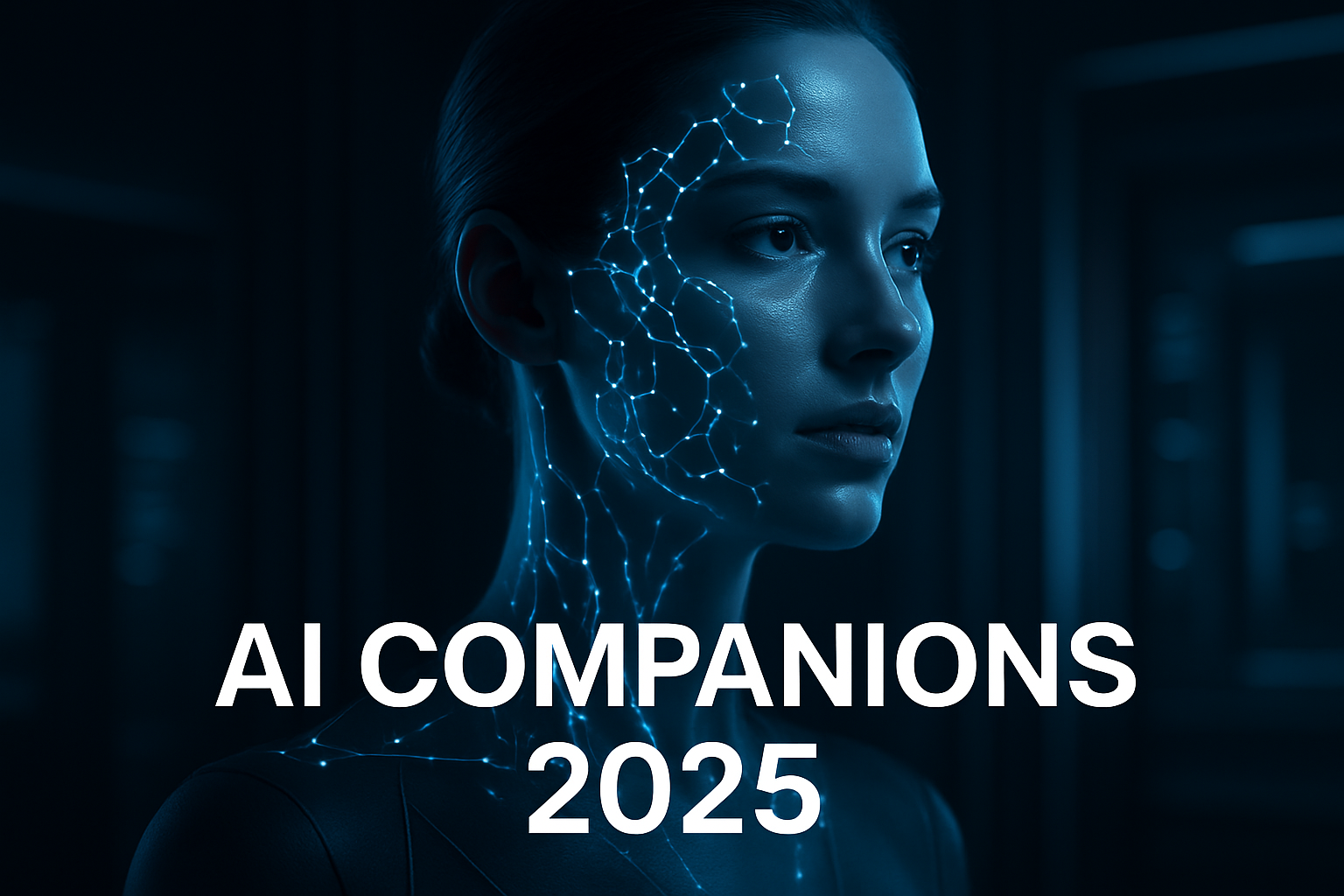
The year 2025 marks the beginning of a truly futuristic era — an era where artificial intelligence is no longer just a tool, but a companion. AI companions, also known as “digital humans”, have become deeply integrated into everyday life through smartphones, smart home devices, virtual platforms, and immersive digital experiences. These AI-driven personalities can talk, learn, understand emotions, and assist people in ways that were once impossible. In this comprehensive guide, we explore how AI companions are reshaping personal life, relationships, productivity, mental health, and the future of digital interaction.
Table of Contents
- Introduction
- 1. What Are AI Companions?
- 2. Why AI Companions Are Exploding in Popularity
- 3. How AI Companions Are Used in Daily Life
- 4. AI Companions and Mental Health
- 5. Can AI Companions Replace Human Interaction?
- 6. AI Companions at Work and Productivity Enhancement
- 7. The Future of AI Companions
- 8. Challenges, Ethics & Privacy Concerns
- Conclusion
Introduction
AI has evolved beyond chatbots and automated tools. Today’s digital humans can hold conversations, show emotional responses, and form long-term memory. People use them for companionship, study support, motivation, therapy-like conversations, and even daily productivity. The rise of AI companions in 2025 shows how technology is influencing the way humans connect, communicate, and build support systems.
1. What Are AI Companions?
AI companions are intelligent digital entities designed to interact with people using natural conversation, emotion-recognition, and personalized responses. They are powered by advanced LLMs (large language models), deep-learning systems, and memory-based personalization.
They can exist in various forms:
- Chat-based companions
- Virtual 3D avatars
- Voice assistants with emotional depth
- Smartdevice companions integrated into home ecosystems
- Holographic AI characters (emerging)
Their purpose is to provide support, enhance productivity, and create meaningful interaction.
2. Why AI Companions Are Exploding in Popularity
There are several reasons for the growing popularity of digital humans in 2025:
✔ Emotional Availability
AI companions are always present, responsive, and non-judgmental — making them ideal emotional anchors.
✔ Personalized Interaction
They learn from the user’s preferences and evolve with their emotional and behavioral patterns.
✔ Zero Social Pressure
People can speak freely without fear of judgment, awkwardness, or rejection.
✔ Unlimited Knowledge
AI companions provide guidance in learning, fitness, mental clarity, financial advice, and more.
3. How AI Companions Are Used in Daily Life
AI companions have integrated into everyday routines in countless ways:
✔ Morning Routine Planning
They set reminders, plan your day, track habits, and motivate you.
✔ Study Assistant
Students use AI companions for explanations, summaries, notes, and tutoring support.
✔ Relationship Coaching
AI companions offer emotional guidance and healthy relationship insights.
✔ Home Automation
Integrated with smart homes, they control lighting, temperature, appliances, and security.
✔ Travel Guidance
They create personalized itineraries and real-time travel assistance.
✔ Fitness Motivation
AI trainers customize diet plans, workouts, and progress reports.
✔ Senior Companionship
Elderly people use AI companions for daily conversation, reminders, medication tracking, and emotional care.
4. AI Companions and Mental Health
One of the biggest impacts of AI companions is on emotional well-being. People dealing with stress, loneliness, anxiety, or burnout are finding comfort in digital humans.
Benefits include:
- Non-judgmental listening
- 24/7 availability
- Emotional reflection prompts
- Daily mood tracking
- Motivational support
While AI cannot replace licensed therapy, it provides emotional relief and support in everyday life.
5. Can AI Companions Replace Human Interaction?
AI companions offer emotional connection, but cannot fully replace human relationships.
However, they complement human interaction by:
- Improving emotional communication skills
- Helping build confidence
- Providing a safe space for self-expression
- Assisting users during loneliness or stress
The goal is support, not replacement.
6. AI Companions at Work and Productivity Enhancement
AI companions are emerging as workplace productivity boosters.
They help with:
- Task management
- Meetings & scheduling
- Emails & documentation
- Idea generation
- Research summaries
- Marketing assistance
Companies are also experimenting with AI teammates that coordinate workloads and workflow optimization.
7. The Future of AI Companions
The next phase of digital humans will include:
- AI with memory-based personalities
- Real-time hologram projections
- AI friends built into AR glasses
- AI-driven emotional intelligence
- Deep voice cloning for personalized companions
- Full-body virtual AI avatars
By 2030, AI companions may become integral to homes, workplaces, vehicles, and healthcare environments.
8. Challenges, Ethics & Privacy Concerns
As powerful as they are, AI companions raise important issues:
Privacy Risks
Personal data and emotional information must be protected with strong encryption.
Dependency Concerns
Spending too much time with AI may affect human relationships.
Emotional Misinterpretation
AI may misunderstand emotional tone without context.
Ethical Control
Ensuring AI remains safe, unbiased, and transparent is essential.
Conclusion
AI companions represent one of the most transformative digital trends of 2025. They bridge technology and humanity, offering emotional support, productivity, motivation, and meaningful interaction. While not a replacement for real human relationships, they improve daily life in remarkable ways. As AI grows smarter, more empathetic, and more integrated into society, digital humans are becoming essential companions for the future.
